Listing Directory: Post Your Need

  • Salahuddin Muhammad Awad Zanoun

    Salahuddin Muhammad Awad Zanoun

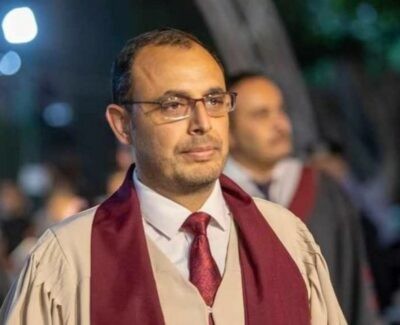
    Dr. Salahuddin Zanoun (Ṣalāḥ al-Dīn Zanūn) (صلاح الدين محمد عواد زنون) was a Professor of Medical Sciences at the Arab College of Applied Sciences.

    At dawn on 15 October 2023, Dr. Zanoun, aged 59, was killed along with seven of his relatives when Israeli occupation forces bombed his home in al-Geneina, Rafah. Among the victims were his wife, Etemad Miqdad (Umm Ahmed), 53; his sons, Dr. Ahmed, 27, Saif al-Din, 25, and Ihab; his daughter, Karima, who was initially reported to have survived but was later confirmed killed; and his nephew, Muhammad Musa Zanoun, 32. The attack destroyed their home and wiped out nearly an entire family, symbolizing the immense human cost and suffering endured by civilians in Gaza.


    Photo credit: Zanoun Family Facebook

  • Said Anwar al-Zebda

    Said Anwar al-Zebda

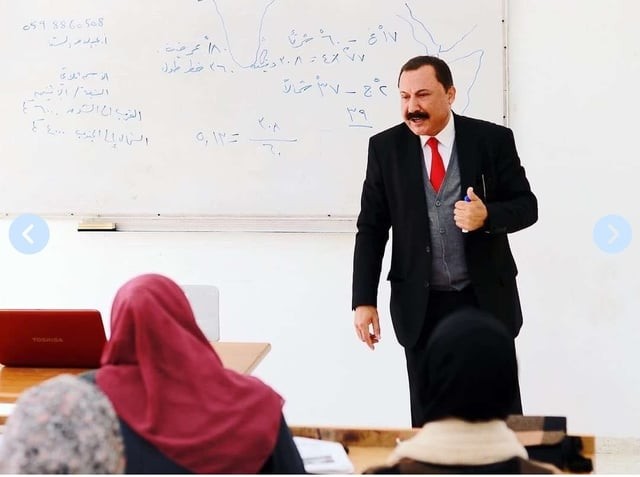
    Dr. Said al-Zebda (Sa‘īd al-Zibda) (سعيد انور الزبدة) was a distinguished Palestinian electrical and computer engineer, academic, and university leader. Born in al-Zaytun neighborhood of Gaza City, he spent most of his life in the Gaza Strip, where he raised his family and dedicated his career to advancing applied sciences and technology. He served as President of the University College of Applied Sciences (UCAS) from 2021.

    After completing his undergraduate studies in telecommunications engineering, Dr. al-Zebda earned both his master’s degree (2007) and PhD (2011) in electronic communications and computer engineering from the University of Nottingham. Upon returning to Gaza, he joined UCAS, where he served in multiple leadership roles for over 18 years. These included Director of Development Programs, Head of the UCAS Technology Incubator, and Assistant to the College President for Developmental Affairs. His academic output included around ten peer-reviewed publications in the field of electronic engineering. Dr. al-Zebda was known for fostering innovation and empowering young entrepreneurs through his work at the incubator.

    On 31 December 2023, Dr. al-Zebda was killed along with his wife Ikram Ghanem and children Az-Zein, Intisar and Samia, when an Israeli airstrike targeted their home in  al-Zaytun neighborhood. His death was mourned by Palestinian academic institutions across the region.

    Dr. Said al-Zebda will be remembered as a visionary scholar and devoted educator who worked tirelessly to strengthen Palestine’s technological and academic capacity under the most difficult conditions. His legacy continues in the institutions he helped shape and the students and professionals he mentored. His personal Facebook profile remains a place where colleagues, students, and friends have shared tributes in his memory.

    Photo credit: X

  • Ali Taysir al-Rantisi

    Ali Taysir al-Rantisi

    Ali al-Rantisi (‘Ali al-Rantīsī) ( علي تيسير الرنتيسي ), age 27, was a full-time teaching assistant in the Department of Geography and Geographic Information Systems at the Islamic University. He had been recruited to his teaching position as a young scholar and teacher of enormous promise, and his adult life as a university teacher and married man had just recently begun.

    Mr. Rantisi was born on 1 January 1997 in Gaza City. He was educated in primary and secondary Gaza schools, and then at the Islamic University in Gaza, from where he graduated with a BA (2019) and an MA (2020) in Geography and Geographic Information Systems. He then became a full-time teacher at the university.

    Mr. Rantisi was also known as a hafiz (a person who has memorized the entire Qur’an). He married his wife, Shahed Omar, in 2021. 

    (Ali al-Rantisi and his mother, Nadia Tafesh)

    Israeli aircraft targeted his house in the al-Zaytun neighborhood in Gaza City on 11 October 2023, without prior warning. The bombing killed Mr. Rantisi along with his mother, Nadia Tafesh.

    Photo credits: Gigaza; X

  • Yusuf Juma’a Abd al-Hadi Salameh

    Yusuf Juma’a Abd al-Hadi Salameh

    Yusuf Salameh (Yūsuf Salāma) (يوسف جمعة عبد الهادي سلامة) was a renowned scholar and teacher, ‘alim, preacher and administrator. He contributed enormously to religious education and religious life and institutions in Palestine. 

    He was born on 16 December 1954 in al-Maghazi Refugee Camp in Dayr al-Balah Governorate in central Gaza. His parents were originally from Bayt Tima, a village 21 kilometers northeast of Gaza. His post-secondary education began at the Teachers Institute in Gaza where he graduated in 1974 with a diploma that allowed him to begin a career as a school teacher. He eventually enrolled in al-Azhar University; he earned a bachelor’s degree in the Fundamentals of Islam (Usūl al-Dīn) and then a license in Shariʿa (Islamic law). Interested in more specialized studies, he completed a master’s degree in Islamic endowments (awqāf), and a doctorate with a thesis on social solidarity in Islamic endowments in Palestine. 

    From 1984 to 1994, Dr. Salameh combined teaching with administrative work at al-Azhar University and al-Azhar Religious Institute in Gaza. While teaching mostly graduate students in the Islamic sciences, he held various positions: Director of Public Relations (1984-90), Secretary of the Academic Council of al-Azhar Institute (1990-92), Director of Preaching and Counseling (1992-1993).

    Having both scholarly and administrative expertise, Dr. Salameh joined the government of Palestine in1994 and worked in the Ministry of Endowments and Religious Affairs. He spent two years as Assistant Deputy Minister (1994-96) and another two as Undersecretary of the Ministry (1996-98), before becoming Acting Minister (1998-2005) and finally, Minister (2005-06). 

    Dr. Salameh played several important roles in religious life in Palestine – as preacher of al-Aqsa Mosque, the first elected vice president of the Supreme Islamic Authority in Jerusalem, and member of the Supreme Fatwa Council in Palestine. In Gaza, he was active in Dar al-Birr Charitable Society and the Grand Maghazi Mosque. 

    At the same time, he remained deeply engaged with the academy. He was, for example, an advisory member of the Faculty of Quran and Islamic Studies at al-Quds University and a member – and former vice president — of the Board of Trustees of al-Azhar University. Furthermore, he was a prolific scholar with a publishing record that spanned 35 years on topics related primarily to rights and duties, rituals, practices and rulings in Islam. His scholarship also included studies on Islamic Palestine and the religious dimension of the status of Palestine. And to share his knowledge with the broader community, he penned a weekly column on religious topics in al-Quds newspaper.  Moreover, Dr. Salameh was outspoken about his profound concern regarding Israeli efforts to erase the Arab identity of Jerusalem by, among other things, restricting Palestinian residence and demolishing Palestinian homes and buildings in the city. 

    Yusuf Salameh died on 31 December 2023. Over the course of several days that month, al-Maghazi Refugee Camp, where he lived with his family, was subjected to near continuous bombardment. His home was hit and he was killed. His wife and daughters were injured; his wife died of her injuries shortly thereafter. Dr. Salameh was 69 years old.

    Photo credit: IPS

  • Abdel Nasser Mustafa Salim al-Saqqa

    Abdel Nasser Mustafa Salim al-Saqqa

    Abdel Nasser al-Saqqa (ʿAbd al-Nāṣir al-Saqqā) (عبد الناصر مصطفى سليم السقا) was a professor of Geography at al-Aqsa University. He had a long and full career there – teaching for almost 28 years and serving as Head of the Department of Geography (2005-06) with multiple two-year terms as Assistant Head. 

    Abdel Nasser al-Saqqa was born in Khan Yunis in the southern portion of the Gaza Strip on 31 May 1964. He went abroad for his university studies. He earned his bachelor’s degree in Geography in 1990 from Garyounis University (name changed in 2011 to University of Benghazi) in Libya, and his master’s – also in Geography — in 1996 from the University of Jordan in Amman. Sometime later, he began doctoral studies in Egypt.  

    Professor al-Saqqa began his career at al-Aqsa University in the 1996-97 academic year. He taught a variety of courses in the Department of Geography, among them, Geography of Palestine, Economic Geography, Human Geography, Geography of Settlement, and Geography of Africa. He supervised numerous student research projects and was active in designing curricula and syllabi. He was a valued member of his department, known for his collegiality and generosity. And he was a much-appreciated teacher whose students, in their tributes to him, highlighted his exceptional teaching skills, as well as his rectitude and kindness:

    One student wrote:  “He was a wonderful, knowledgeable teacher, always advising and responsive whenever we had difficulties. In truth, we never witnessed anything from him except good treatment, a pleasant smile, and fine manners.”

    Another student wrote: “Dr. Abdel Nasser al-Saqqa was my favorite professor at al-Aqsa University. He was a professor of geography and specialized in the land of Palestine. I took his classes from 2014 to 2018. He was generous and kind to his students.” 

    This same student added the following: “His four children and wife lived abroad in Belgium, to have a better life amid Israel’s continuing siege on Gaza. But Dr. Abdel Nasser – also known as Abu Mustafa – stayed in Gaza out of his dedication to his students and to continue his work as a professor. He spoke often of his children and how he looked forward to visiting them….         … In his last post on Facebook, he wrote of the pain he felt in the constant communications blackouts, how he had gone for days upon days without being able to speak to his children. ‘Maybe better days will bring us together’, he wrote….”

    Abdel Nasser al-Saqqa was killed on Sunday, 7 January 2024 when Israeli airstrikes targeted his home during an intense bombing campaign in Khan Yunis. He was 59 years old, a father, a husband and a beloved professor.

    Photo credits: Facebook; Gigaza; Reddit

  • Muhammad Eid Shabir

    Muhammad Eid Shabir

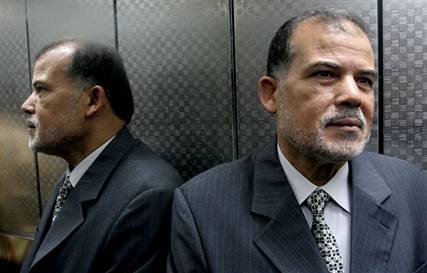
    Dr. Muhammad Shabir (Muḥammad Shabīr) (محمد عيد شبير) was a Palestinian academic, microbiologist, and political figure who played a significant role in Palestinian higher education and national politics. He was best known for his tenure as President of the Islamic University of Gaza from 1990 to 2005 and for his brief designation in 2006 as Prime Minister-in-waiting during efforts to form a Palestinian national unity government.

    Born in Khan Yunis on 28 March 1946, Shabir pursued higher education in the United States, earning his Ph.D. in microbiology from Marshall University. Upon his return to Gaza, he became a leading figure in academia, specializing in microbiology, virology, and immunology. His scholarly contributions included research papers and public lectures in the biomedical sciences. One of his better-known works was titled The Miracle of the Human Immunodeficiency Virus, in which he explored the scientific and ethical complexities of HIV/AIDS.

    As President of the Islamic University of Gaza, Shabir led the institution through a period of growth, academic expansion, and increasing international engagement, despite the growing blockade and regional instability. He was known for his balanced relationships across political factions, including Fatah and Hamas, and was considered a politically moderate and unifying figure.

    In November 2006, Shabir was nominated by consensus of both Hamas and Fatah to lead a unity government as Prime Minister, a role that would have made him a key transitional leader during one of the most politically fragile periods in Palestinian governance. Although the unity government ultimately collapsed and Shabir did not assume the office, his nomination reflected the broad respect he commanded across the Palestinian political spectrum.

    Shabir maintained close relationships with senior political leaders, including the late Yasser Arafat, whom he regularly visited in both Gaza and the West Bank. Outside of politics, he was a family man with six children. His wife, Rehab Mohammad Shabir, served as deputy minister of women’s affairs in the Palestinian government.

    On 12 November 2023, during the Gaza genocide, Dr. Muhammad Eid Shabir was critically wounded in an Israeli airstrike on his family home in Gaza City. Although he initially survived the blast, he was later shot and killed by an Israeli sniper. He was 77 years old. The airstrike killed five members of his family, including his wife Rehab, their daughter-in-law Najat Ayoub Alhelo, and their infant grandson Muhammad Malik Shabir.

    Dr. Shabir is remembered for his scientific contributions, educational leadership, political moderation, and his unwavering commitment to the Palestinian people through education and dialogue.

    Photo credit: Al-Jazeeera

  • Bassam Mohammed Omar Shaheen

    Bassam Mohammed Omar Shaheen

    Born in 1964, Dr. Bassam Shaheen (Shāhīn) ( بسام محمد عمر شاهين) held a PhD in nursing from the University of Al-Butana in Sudan in 2021. He worked as a vice-dean for graduate studies at al-Azhar University in Gaza, and published  research on cancer prevention. The findings provided a comprehensive overview and useful recommendations to create the national cancer control plan. 

    After surviving two direct strikes on where he was staying with his family in the Muhandiseen and Salhi towers in Gaza City, during which he sustained moderate injuries, Dr. Bassam was killed alongside his family in a strike on Dayr al-Balah on 11 November 2023.


    Photo credit: Shireen website

  • Anwar Sa`di Habib Shaldan

    Anwar Sa`di Habib Shaldan

    Anwar Shaldan (Shaldān) (أنور سعدي حبيب شلدان), 49, worked as an education supervisor at the Gaza Ministry of Education and Higher Education to promote the teaching and learning of science across all grade levels, from first grade to high school. He was part of a dedicated science committee within the Ministry that worked to integrate scientific inquiry into school curricula and kindle the interest of teachers and students alike in scientific thinking.

    Shaldan studied physics and chemistry at al-Quds Open University, and in 2001 earned a Master’s degree from al-Azhar University. His thesis examined the impact of hands-on science activities on Gazan fifth graders’ cognitive development. He also worked on changing how students were taught science, teaching courses in science pedagogy to education students at the University of Palestine.

    Repeated Israeli assaults on Gaza, combined with the blockade, took a heavy toll on the education sector, as explored in a conference at the Islamic University of Gaza that Shaldan participated in after the 51-day Israeli assault of 2014. Overcrowded classrooms, absenteeism, increasing dropout rates, and the lack of computer and science labs impinged on both students’ capacities to learn and teachers’ skills and motivation. Extreme restrictions on movement prevented professional development through mutual exchange between Gazan teachers and their peers in the West Bank, to say nothing of travel abroad.

    Concerning Shaldan’s specific subject, studies showed a deficit in science education relative to other subjects. A World Bank “Quick Note” reported that less than 15% of Palestinian university graduates majored in sciences or engineering; education, the social sciences, business, and law claimed the lion’s share of university students.

    In 2015, the Gaza branch of the Education Ministry launched a yearslong initiative to build a culture of scientific research in high schools. Anwar Shaldan was heavily involved in this project, becoming a member of a dedicated science committee in the ministry. They organized teacher training workshops that emphasized learning by doing over traditional pedagogy based on transmission. As a study of Gaza’s education sector pointed out, “self-motivated and engaging teachers require qualified, competent, and trained teacher educators and supervisors.” 

    In 2020 remarks honoring a high school teacher in al-Shuja`iyya for her creative blending of arts and science education, Shaldan said, “Teaching science is not only about recall and rote memorization, but should be integrated into experiential contexts, to increase students’ love and enthusiasm for science subjects. This is the highest goal of teaching science.”

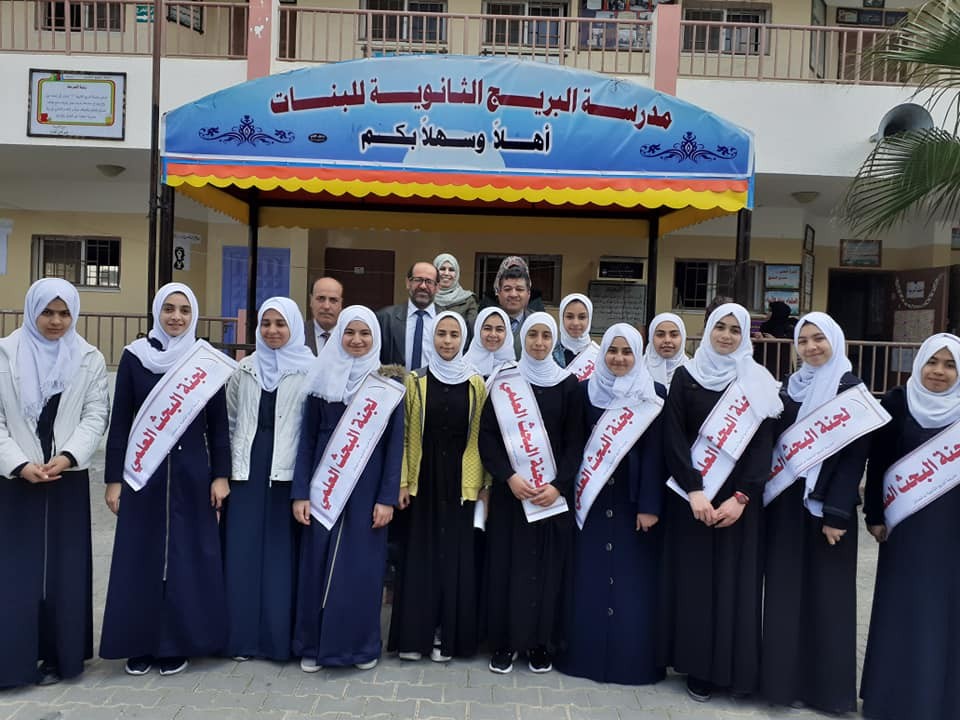
    (Shaldan, center back row, recognizing high-achieving science students at al-Burayj Girls’ High School)

    The committee also worked to motivate students, making onsite visits to high schools and science fairs to judge students’ science projects and presentations. Elementary schools were not left out. Shaldan conducted classroom observations in primary schools, including a second-grade girls’ class in al-Zaytun. The day’s lesson was a reading and performance of the evocative children’s tale ‘Awdat al-Ta’ir (Return of the Bird), penned by Gazan poet Muin Bseiso (1926-1984).

    Master teacher Anwar Shaldan was killed in the Israeli genocide on 13 May 2024 in al-Zaytun. 


    Photo credits: Facebook (here and here)

  • Jamila Abdallah Taha al-Shanti

    Jamila Abdallah Taha al-Shanti

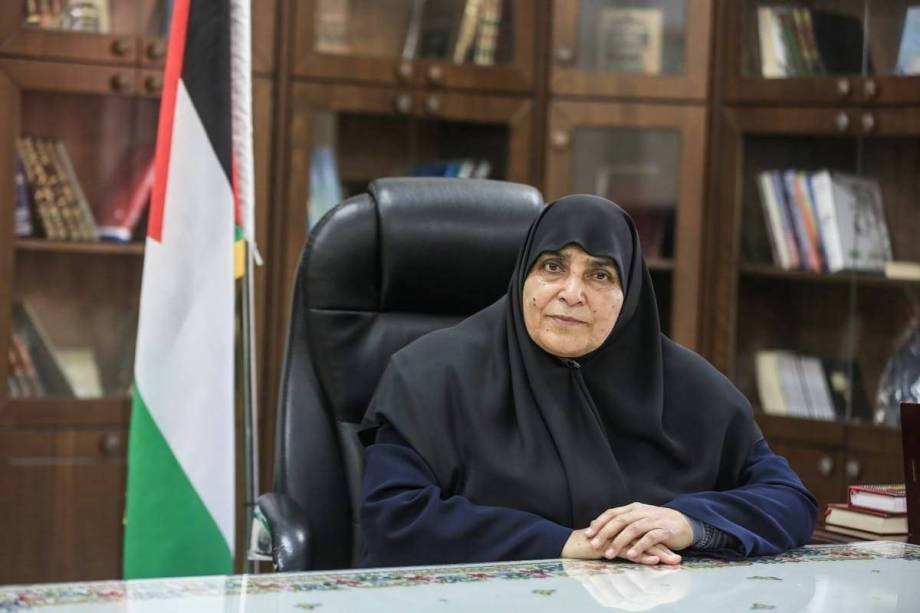
    Jamila al-Shanti (Jamīla al-Shanṭī) (جميلة عبد الله طه الشنطي) was a teacher, university lecturer, and one of the most prominent politicians in Gaza. She held posts as a parliamentarian, government minister, and the first and only woman member elected to the politburo of the Islamic Resistance Movement, Hamas.

    Dr. al-Shanti was born in Jabalya Refugee Camp in 1955 or 1957 to a family from a village near Majdal. She was educated in UNRWA schools, then traveled to Cairo for university, where she earned a BA in English Language and Literature from Ain Shams University in 1980. 

    At Ain Shams Dr. al-Shanti joined the Society of Muslim Brothers (Jam`at al-Ikhwan al-Muslimun), finding it a congenial milieu for what she described as her conservative upbringing. After graduation, she moved to Saudi Arabia to teach English for 10 years to support her five younger siblings. Upon returning to Gaza in 1990, she joined the Faculty of Education at the Islamic University of Gaza as a lecturer, where she earned an MA in 1998 and a PhD in Education Management in 2013.

    In 2006, Dr. al-Shanti came to prominence when she was one of six women elected to the Palestinian Legislative Council (PLC) on the Hamas slate. At number three, Dr. al-Shanti was the highest-placed woman; Hamas leader Ismail Haniyeh was first.

    Journalist Paola Caridi observed that Dr. al-Shanti was among “the small platoon of women deputies who arrived in Parliament, allowing women to carve out for themselves a role that the more conservative sectors of Hamas would not have wanted.” 

    In a 2008 article in al-Bayan, Dr. al-Shanti described a de facto gender equality forged in the fire of Israeli occupation, which “has observed no sanctity for women, nor revered their motherhood, and so they confront the occupation forces head-on, trading fire with fire and blood with blood.” 

    Dr. al-Shanti was alluding to a protest by hundreds of Islamist women that she led in 2006, to free fighters besieged in a mosque during an Israeli attack on Bayt Hanun, a harrowing episode that she recalled in The Guardian.

    A few days later, Israeli warplanes destroyed Dr. al-Shanti’s house, killing her sister-in-law Nahla, a widow raising eight children. 

    In 2013, Dr. al-Shanti was appointed Minister of Women’s Affairs in the Hamas administration. She focused on female unemployment and proportional representation of women in leadership positions. Reflecting on the experience, she said that being a minister brought her into contact with a far wider range of women in Gaza and taught her the rigors of administrative work.

    In early 2021, Hamas conducted its regular internal elections among members in Gaza, the West Bank, and those incarcerated across 22 Israeli prisons. The results netted a nearly 30% leadership turnover, and Dr. al-Shanti became the first woman ever elected to the 19-member politburo. 

    Asked by an al-Jazeera anchor why it had taken Hamas so long to include women in its peak leadership council, Dr. al-Shanti said that Hamas leaders sought to protect female members from Israeli assassination. But after the 2014 Israeli assault on Gaza, “women were targeted regardless of where they were,” so there was no longer a credible rationale for shielding them.

    On 18 October 2023, Dr. al-Shanti was killed in an Israeli airstrike on her home, becoming the fourth Hamas politburo member to be killed at that point. 

    The Palestinian Legislative Council paid tribute to Dr. al-Shanti, “who lived a life brimming with exertion and sacrifice to uplift the Palestinian cause. We will continue on her path and the path of all our righteous martyrs, until the occupation of our lands is defeated.” 

    Photo credit: Ali Jadallah/Anadolu Agency

  • Muʾmin Ahmed Dhiyab Shwaideh

    Muʾmin Ahmed Dhiyab Shwaideh

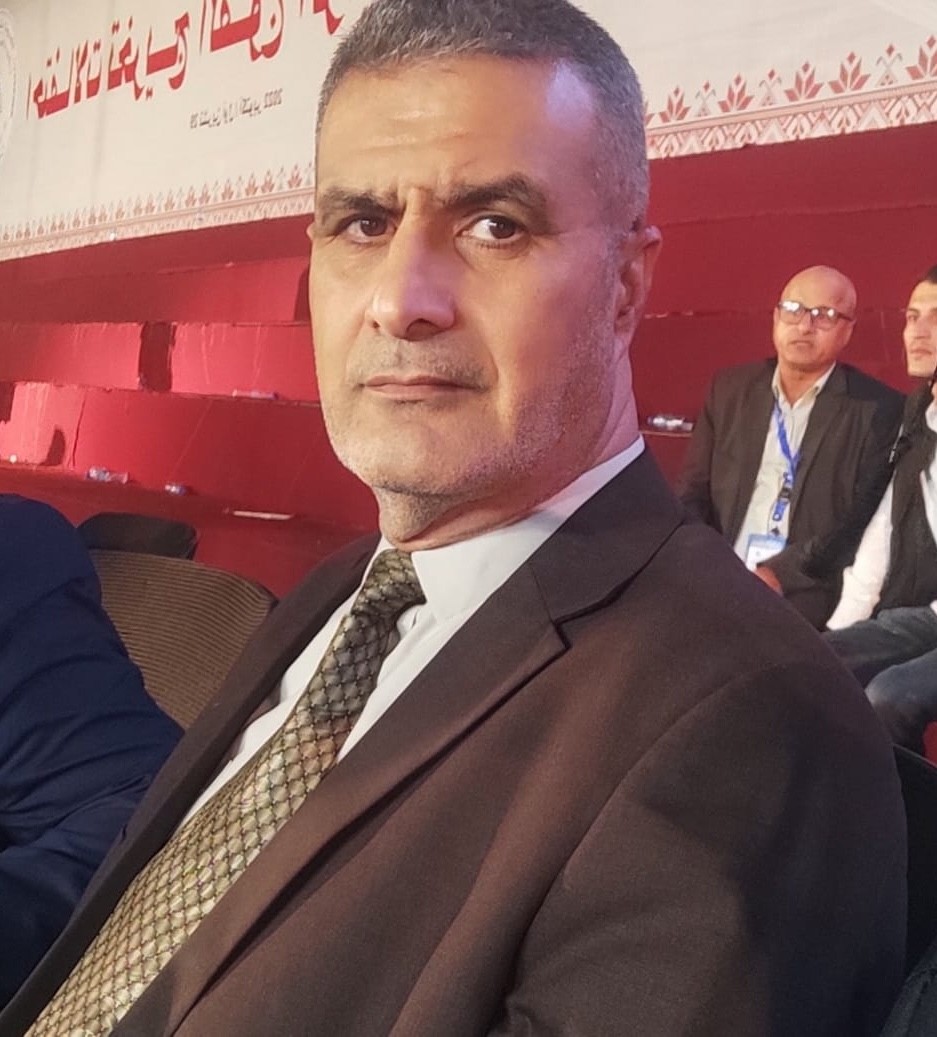
    Muʾmin Shwaideh (Shwaydaḥ) (مؤمن أحمد ذياب شويدح ) was a lecturer in the Faculty of Sharia and Law, and supervisor of Graduate Studies at the Islamic University in Gaza. 

    Professor Shwaideh appears to have earned two master’s degrees: the first, in Comparative Fiqh (Islamic Jurisprudence), from the Putra Malaysia University in the state of Selangor (Malaysia) in 2006 and the second, in General Law, from the Faculty of Shariʿa and Law at the Islamic University-Gaza in 2019. His 2006 thesis addressed inheritance and succession in Islamic law and was entitled, The Impact of Modern Communication Methods on the Inheritance of the Missing in Islamic Jurisprudence. With his specialization in comparative fiqh, he was one of very few young scholars in Gaza to obtain a professorship in this domain. Moreover, this expertise qualified him to join the prestigious Fatwa Council of the Islamic University.

    His second thesis (November 2019), in General Law, was entitled, A Legal Discussion Applying the Principles of the Islamic Shariʿa as a Chief Source for Palestinian Legislation – an Applied Analytical Study of Penal Legislation. Photos of his defense and a video of the conferring of his degree can be viewed on his Facebook page here and here. In addition to the two theses, which were published by the Islamic University in Gaza, Professor Shwaideh published an article that treated his longstanding concern with how Islamic law would adjudicate particular novel practices in contemporary society. Entitled, “Profit from the Sale and Marketing of Advertising Services by Websites in Light of Islamic Law,” it appeared in the Journal of Sharia and Islamic Studies (Kuwait University, 2018). 

    Professor Shwaideh was an active scholar who sought opportunities to continue to learn and broaden his knowledge about legal matters. As an example, according to his colleagues, he chose to take part in a training course on international humanitarian law. The course was open to academics and judges from the Middle East and North Africa and beyond, and held in Beirut in March 2012. At that time, he was Assistant Vice Dean of the Faculty of Shariʿa and Law at the Islamic University of Gaza.

    Alongside his teaching, scholarship and administrative work at the university, Muʾmin Shwaideh was involved with the al-Quds Society for Islamic Research and Studies and a member of the League of Islamic Scholars of Palestine. 

    Muʾmin Shwaideh died on 23 November 2023 (some sources say 18 November) when his home in Dayr al-Balah was bombed by Israeli forces. He was 39 years old. He was killed along with his brother, academic Mustafa Shwaideh, and other members of his family. The youngest relative who died with him — Ya’la Muʾmin Ahmed Shwaideh — was only one year old and carried his name. 

    Photo credit: IPS