Listing Directory: Post Your Need

  • Jamila Abdallah Taha al-Shanti

    Jamila Abdallah Taha al-Shanti

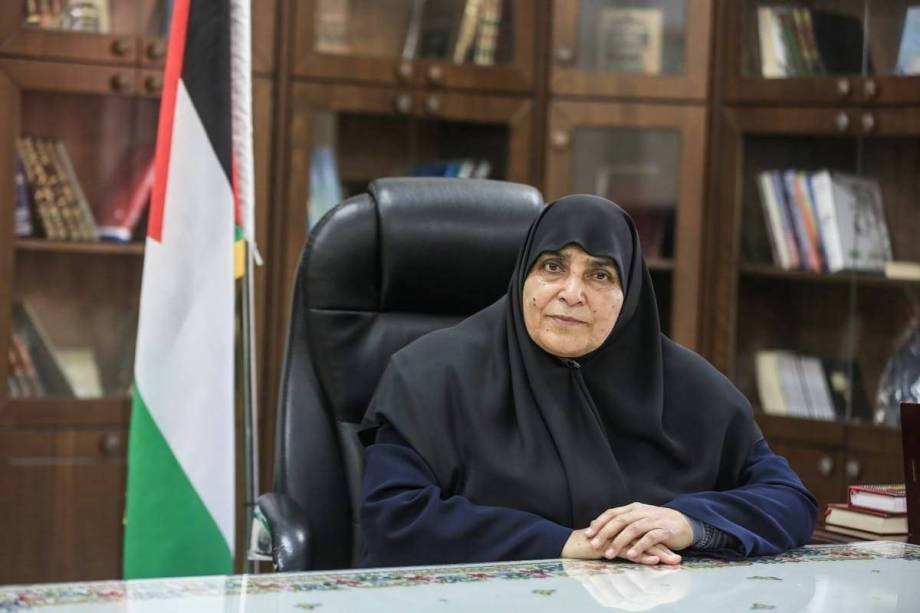
    Jamila al-Shanti (Jamīla al-Shanṭī) (جميلة عبد الله طه الشنطي) was a teacher, university lecturer, and one of the most prominent politicians in Gaza. She held posts as a parliamentarian, government minister, and the first and only woman member elected to the politburo of the Islamic Resistance Movement, Hamas.

    Dr. al-Shanti was born in Jabalya Refugee Camp in 1955 or 1957 to a family from a village near Majdal. She was educated in UNRWA schools, then traveled to Cairo for university, where she earned a BA in English Language and Literature from Ain Shams University in 1980. 

    At Ain Shams Dr. al-Shanti joined the Society of Muslim Brothers (Jam`at al-Ikhwan al-Muslimun), finding it a congenial milieu for what she described as her conservative upbringing. After graduation, she moved to Saudi Arabia to teach English for 10 years to support her five younger siblings. Upon returning to Gaza in 1990, she joined the Faculty of Education at the Islamic University of Gaza as a lecturer, where she earned an MA in 1998 and a PhD in Education Management in 2013.

    In 2006, Dr. al-Shanti came to prominence when she was one of six women elected to the Palestinian Legislative Council (PLC) on the Hamas slate. At number three, Dr. al-Shanti was the highest-placed woman; Hamas leader Ismail Haniyeh was first.

    Journalist Paola Caridi observed that Dr. al-Shanti was among “the small platoon of women deputies who arrived in Parliament, allowing women to carve out for themselves a role that the more conservative sectors of Hamas would not have wanted.” 

    In a 2008 article in al-Bayan, Dr. al-Shanti described a de facto gender equality forged in the fire of Israeli occupation, which “has observed no sanctity for women, nor revered their motherhood, and so they confront the occupation forces head-on, trading fire with fire and blood with blood.” 

    Dr. al-Shanti was alluding to a protest by hundreds of Islamist women that she led in 2006, to free fighters besieged in a mosque during an Israeli attack on Bayt Hanun, a harrowing episode that she recalled in The Guardian.

    A few days later, Israeli warplanes destroyed Dr. al-Shanti’s house, killing her sister-in-law Nahla, a widow raising eight children. 

    In 2013, Dr. al-Shanti was appointed Minister of Women’s Affairs in the Hamas administration. She focused on female unemployment and proportional representation of women in leadership positions. Reflecting on the experience, she said that being a minister brought her into contact with a far wider range of women in Gaza and taught her the rigors of administrative work.

    In early 2021, Hamas conducted its regular internal elections among members in Gaza, the West Bank, and those incarcerated across 22 Israeli prisons. The results netted a nearly 30% leadership turnover, and Dr. al-Shanti became the first woman ever elected to the 19-member politburo. 

    Asked by an al-Jazeera anchor why it had taken Hamas so long to include women in its peak leadership council, Dr. al-Shanti said that Hamas leaders sought to protect female members from Israeli assassination. But after the 2014 Israeli assault on Gaza, “women were targeted regardless of where they were,” so there was no longer a credible rationale for shielding them.

    On 18 October 2023, Dr. al-Shanti was killed in an Israeli airstrike on her home, becoming the fourth Hamas politburo member to be killed at that point. 

    The Palestinian Legislative Council paid tribute to Dr. al-Shanti, “who lived a life brimming with exertion and sacrifice to uplift the Palestinian cause. We will continue on her path and the path of all our righteous martyrs, until the occupation of our lands is defeated.” 

    Photo credit: Ali Jadallah/Anadolu Agency

  • Muʾmin Ahmed Dhiyab Shwaideh

    Muʾmin Ahmed Dhiyab Shwaideh

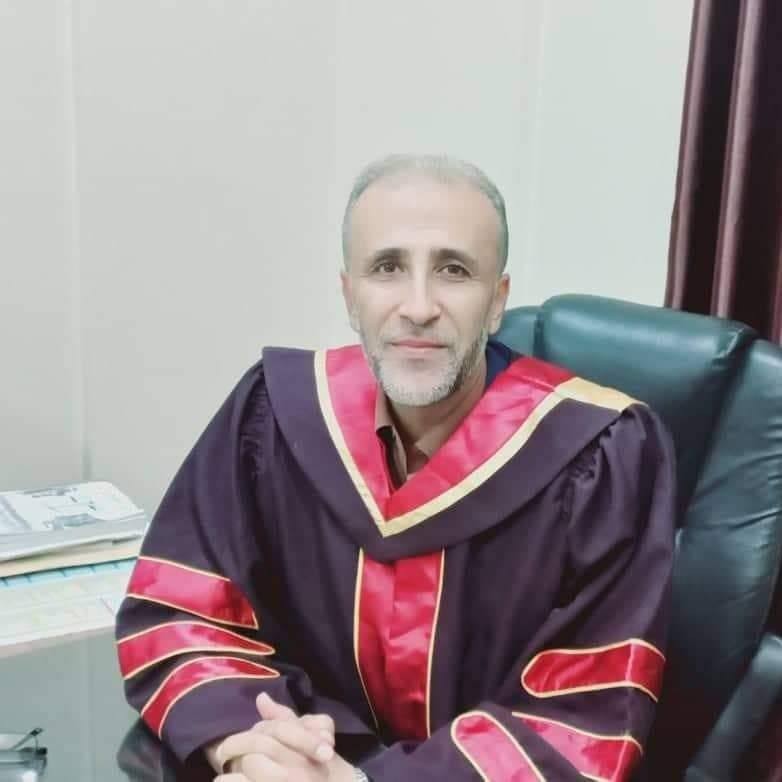
    Muʾmin Shwaideh (Shwaydaḥ) (مؤمن أحمد ذياب شويدح ) was a lecturer in the Faculty of Sharia and Law, and supervisor of Graduate Studies at the Islamic University in Gaza. 

    Professor Shwaideh appears to have earned two master’s degrees: the first, in Comparative Fiqh (Islamic Jurisprudence), from the Putra Malaysia University in the state of Selangor (Malaysia) in 2006 and the second, in General Law, from the Faculty of Shariʿa and Law at the Islamic University-Gaza in 2019. His 2006 thesis addressed inheritance and succession in Islamic law and was entitled, The Impact of Modern Communication Methods on the Inheritance of the Missing in Islamic Jurisprudence. With his specialization in comparative fiqh, he was one of very few young scholars in Gaza to obtain a professorship in this domain. Moreover, this expertise qualified him to join the prestigious Fatwa Council of the Islamic University.

    His second thesis (November 2019), in General Law, was entitled, A Legal Discussion Applying the Principles of the Islamic Shariʿa as a Chief Source for Palestinian Legislation – an Applied Analytical Study of Penal Legislation. Photos of his defense and a video of the conferring of his degree can be viewed on his Facebook page here and here. In addition to the two theses, which were published by the Islamic University in Gaza, Professor Shwaideh published an article that treated his longstanding concern with how Islamic law would adjudicate particular novel practices in contemporary society. Entitled, “Profit from the Sale and Marketing of Advertising Services by Websites in Light of Islamic Law,” it appeared in the Journal of Sharia and Islamic Studies (Kuwait University, 2018). 

    Professor Shwaideh was an active scholar who sought opportunities to continue to learn and broaden his knowledge about legal matters. As an example, according to his colleagues, he chose to take part in a training course on international humanitarian law. The course was open to academics and judges from the Middle East and North Africa and beyond, and held in Beirut in March 2012. At that time, he was Assistant Vice Dean of the Faculty of Shariʿa and Law at the Islamic University of Gaza.

    Alongside his teaching, scholarship and administrative work at the university, Muʾmin Shwaideh was involved with the al-Quds Society for Islamic Research and Studies and a member of the League of Islamic Scholars of Palestine. 

    Muʾmin Shwaideh died on 23 November 2023 (some sources say 18 November) when his home in Dayr al-Balah was bombed by Israeli forces. He was 39 years old. He was killed along with his brother, academic Mustafa Shwaideh, and other members of his family. The youngest relative who died with him — Ya’la Muʾmin Ahmed Shwaideh — was only one year old and carried his name. 

    Photo credit: IPS

  • Ismail Muhammad Ahmad Al-Ghamry

    Ismail Muhammad Ahmad Al-Ghamry

    Ismail (Ismā‘īl) al-Ghamry (إسماعيل محمد أحمد الغمري) was a promising pedagogue who had just started a career in studying and teaching the Arabic language. He was a lecturer in the Curricula and Teaching Methods Department at the Islamic University of Gaza (IUG). In 2017, the Department inaugurated a doctoral program, becoming the only one in Gaza to grant PhDs in Pedagogy.

    Born in 1992 in al-Maghazi, Dr. al-Ghamry received his BA in Arabic from al-Aqsa University in 2013, followed five years later by an MA from the Faculty of Education at IUG. In 2021, he earned a PhD from the University of the Holy Qur’an and Islamic Sciences in Omdurman, Sudan.

    His MA thesis sought to test whether flipped classrooms had a positive effect on high school students’ prosody skills. The research was motivated by the problem of classroom crowding, where teachers cannot cater to individual students, necessitating more active learning options as an alternative to passive rote transmission. A report on education from Gaza’s Al Mezan Center for Human Rights indicated that the number of students per classroom averaged 41.20 at UNRWA schools, 39.56 at governmental schools, and 21.65 at private schools.

    Based on a sample of 60 11th graders at al-Shuhada’ school, a boys’ public school in al-Maghazi, the thesis found a significant effect on students’ rhetorical skills, compared to a control group, but an average effect on developing prosody skills.

    Two days after turning 32 years old, Dr. al-Ghamry was killed by an Israeli airstrike on 3 January 2024. His sister mourned him in a poignant tribute on Instagram as a fount of affection for all that he treasured.

    In the dedicatory pages of his Master’s thesis, Dr. al-Ghamry expressed his love for the Prophet Muhammad, for his family, and for Palestine. “To a homeland for whom we have journeyed all the phases of life, as refugees, as the displaced, as prisoners, as a people under siege. In spite of everything, we broke our chains and penned what we desired, and soared higher and higher.”

    Photo credit: Facebook

  • Khalil Ibrahim Ahmad al-Nakhal

    Khalil Ibrahim Ahmad al-Nakhal

    Khalil al-Nakhal (Khalīl al-Nakhāl) (خليل إبرهيم احمد النخال), 67, was the consultant anesthesiologist and head of anesthesiology at al-Shifa Hospital Complex. A consultant physician is one of the most senior doctors in a hospital. S/he is a specialist in a particular field, trains junior doctors and hospital staff to ensure high performance, and publishes research findings.

    Dr. al-Nakhal performed all these roles. His career predates and tracks the methodical capacity-building of Gaza’s health infrastructure, an enormous effort described in a June 2024 Reuters investigation. The initiative was acutely needed in light of the blockade imposed on Gaza by Israel in 2007, and the severe restrictions on movement that prevented many patients from traveling outside Gaza to receive timely care. 

    In 2010, Dr. al-Nakhal was part of a team of doctors who performed two surgeries that had never before been conducted in Gaza. One was on a patient with severe stab wounds to the heart and lung, and the other on a patient with a shattered hand and wrist. 

    In 2012, he coauthored a note in The Lancet reporting findings on the frequency of nosocomial infections in patients admitted to al-Shifa’s ICU, the largest in Gaza.

    At dawn on 12 November 2023, Dr. al-Nakhal was killed by an Israeli airstrike on his home in Gaza City. Murdered along with him was his son, Ahmad Khalil Ibrahim al-Nakhal, his son-in-law, Dr. Hammam Alloh (al-Lawh), the only kidney disease and transplant specialist in Gaza (see his bio in this archive), and Dr. Hammam’s father, Mahmoud Hassan Mostafa al-Louh. Six other family members were injured.

    Ambulances could not reach the home, due to the Israeli military’s blocking of all access to the neighborhood, as it oversaw the forcible evacuation of the nearby al-Shifa Hospital.

    Photo credit: Facebook

  • Hossam Ahmed Abdel Mo`ti Hamada

    Hossam Ahmed Abdel Mo`ti Hamada

    Hossam Hamada (Ḥusām Ḥamāda) (حسام أحمد عبد المعطي حمادة), 55, was the most senior of Gaza’s five pathologists. As the head of the Pathology Department at al-Shifa Hospital, he worked to build pathology care almost from scratch, an important part of cancer care. In 2019, cancer was the second-leading cause of death in Palestine, after heart disease.

    Dr. Hamada received his medical degree from Ankara University’s Faculty of Medicine in 1996, and six years later completed his specialty at the Pathology Department of Hacettepe University in Ankara, Türkiye. Upon returning to Gaza, he was on the teaching staff at the Islamic University and al-Azhar University, and in 2010, was appointed Chair of the Pathology Department at Gaza’s al-Shifa Hospital Complex.

    The department was established in 1991, and expanded in the aughts to include two wings: cytology and histology. In 2021, Dr. Hamada indicated that the lab had analyzed 5,238 samples in that year.

    Dr. Hamada did not only run the lab, he devoted time to educating the public about his work. In a 2015 interview, he explained the foundational role of pathologists in healthcare, from examining the behavior of viruses and bacteria to guiding doctors on disease treatment. He underlined the importance of building an infrastructure for scientific research, especially the building and protecting of a pathology sample archive.

    At the first conference dedicated to cancer in Gaza, held at the Islamic University in 2022, he laid out the mechanisms of cancer treatment at the molecular level. And in a brief promo video, he thanked the UK-based Medical Aid for Palestinians for a new automated immunostainer that would help increase the speed and accuracy of cancer testing.

    During the genocide, Dr. Hamada tended to the wounded in his neighborhood of Tal al-Hawa until first responders could arrive. On 21 January, 2024, an Israeli sniper struck Dr. Hamada. Rescuers made frantic efforts to reach him, but were unable to do so before 23 January. He bled to his death on the pavement. “His body was carried on a piece of wood to Shifa hospital where he spent 25 years of his life dedicated to his community,” reported his colleague Dr. Orhan Alimoğlu.

    A Turkish surgeon who made several trips to Gaza before 2023, Dr. Alimoğlu recalled, “Apart from his professional life, [Dr. Hamada] was deeply fond of painting and reading. He expressed himself with these works and had the opportunity to console himself with them against the difficulties of life in Gaza.”

    Dr. Hamada’s niece Aseel, a third-year medical student, said, “He wouldn’t want to be anywhere else but Gaza, even in its darkest times. If he were alive, he would still choose Gaza, again and again.” 

    With the murder of Dr. Hamada and another pathologist, Dr. Mohammed Dabbour Assa`ad (see bio in this archive), and the retirement of two others, only one pathologist remains, Dr. Aziza Alkinn at the European Hospital in Khan Younis.

    “It takes five years of medical school, three-four years of internal medicine, and then another four-five years as a pathologist. So that is the number of years if we start today training a new generation of pathologists,” pointed out Palestinian-British surgeon Dr. Ghassan Abu Sitta at a 2025 public event.


    Photo credit: Gigaza

  • Mohammed Ibrahim ʿAttia Hammad

    Mohammed Ibrahim ʿAttia Hammad

    Mohammed Hammad (Muḥammad Hammād) (محمد إبراهيم عطية حماد) was a lecturer in Business in the Department of Business Management at al-Aqsa University in Gaza. He was a full-time member of the department from July 2009 until the time of his death – a total of 15 years and 8 months. He was married to Ḥanān Fūʾād; they had three children.

    Professor Hammad received his Master’s of Business Administration (MBA) from Near East University in Nicosia, Cyprus and had a special interest in entrepreneurship. With a colleague from al-Israa University in Gaza, he co-authored an article published in English in the Indian Journal of Management and Applied Science in 2020. In it, they describe a study they conducted of 100 Palestinian non-governmental organizations to evaluate, through the lens of Business Continuity Management, their preparedness in responding to an unexpected crisis – in this case, the Corona Virus Pandemic — that could impede their operations and hence their efficacy. 

    According to an interview Professor Hammad gave to the magazine Youm 7 in December 2023 — just a few days before his death, he had planned to continue his doctoral studies in Malaysia once the war on Gaza ended. In fact, his profile on his Facebook page suggests that he had been working towards a PhD from the USIM University in Malaysia. He had completed his coursework and his dissertation but was unable to leave Gaza for his defense. Nonetheless, an English translation of his dissertation – Entrepreneurial Characteristics and Job Performance in Palestine — was published posthumously in 2025 and delivered to his family. 

    In that same interview to Youm 7, Mohammed Hammad insisted upon his refusal to be displaced from his home, recalling with bitterness the forced displacement his father had endured in 1948. He called for international support for the Palestinians of Gaza who, as he described, were enduring very harsh conditions. And he spoke of his grief – referring to the killing of six of his sister’s children and grandchildren whose home had been struck by Israeli shelling. His description of his search through the rubble following the attack is heart-rending: 

    “I was sad when I saw the floors of the house piled up on top of each other and I didn’t know if [those inside] were saved or martyred. I shouted to others to help us and sat on the rubble hoping to find something… I eventually found one thing: a single shoe of the beautiful child Mohammed. I cried bitterly because having found his shoe, I understood that he had been martyred and was no longer present.”

    He ended the interview with these words: “We need urgent intervention to save us immediately.” 

    Mohammed Hammad was killed on 24 December 2023 along with his eldest son, Mohannad in an Israeli raid on his home in al-Jalaaʾ neighborhood, Khan Yunis. On the first anniversary of their deaths, his wife wrote the following on her husband’s Facebook page: 

    “Days go by so quickly, it has been a year since I lost my heart… and I still do not believe or understand what happened to me. I have lost the most precious and most beautiful gifts of the Most Merciful — my husband Mohammed Hammad and my eldest son Muhannad Hammad. I continue to search for them in the features and behaviors of my (living) children….”

    Photo credits: Youm 7; Facebook

  • Rahaf Muhammad Handiq

    Rahaf Muhammad Handiq

    Rahaf Handiq (Rahaf Ḥunaydiq) (رهف محمد حنيدق) was a teacher and scholar who worked as a lecturer in the Faculty of Theology at the Islamic University of Gaza and acted as an educational supervisor at Akka Secondary School. She was a pillar of the Khan Yunis community: she served as a religion teacher and premarital counselor at several mosques in Gaza and was an active member of Fatah and a number of civic groups, including the UNRWA Women’s Center for Cultural and Sports Activities, the Palestinian Elders Assembly, the Women’s Affairs Committee, and the Academic Campaign against the Israeli Occupation. 

    Dr. Handiq was born on 29 April 1973, in the Yarmouk Camp in Syria. Her father was an officer in the Palestine Liberation Army, the military wing of the PLO. She completed her primary and preparatory education at UNRWA schools in the camp and then obtained her high school diploma from Yarmouk High School. She went on to earn a university degree in civil engineering in Syria in 1994.

    Her family made the decision to return to Palestine sometime after the signing of the Oslo Accords and the establishment of the Palestinian Authority. Once in Gaza, Dr. Handiq changed course and turned to the study of religion at the Islamic University where she completed a BA in the Fundamentals of Religion, an MA in Contemporary Doctrines and Legal Schools (2016), and a PhD in the Fundamentals of Contemporary Doctrine (2022). She published several academic articles in the Islamic University Journal of Islamic Studies, including “Atheism and Crime in the Modern Age” (2023), and “Al-kursi and al-`arsh [Qur’anic verses] between the Sunnis and Twelver Shi’ites (2018).” She also wrote opinion pieces for the Anbaa Express website that addressed issues of Israeli religious extremism, the conditions in Israeli prisons, and the status of Arab women. 

    Dr. Handiq wrote movingly about the many privations and human losses in Gaza during the time she lived through the Israeli assault. A month prior to her death, she wrote her last post on her Facebook page: “Whenever I cry or become weak, they ask me not to cry, but I am tired and exhausted, and I want to cry… Oh God, I want to cry… even crying is forbidden for us.” 

    Dr. Handiq and her family were displaced from Khan Yunis to a “safe zone” in Rafah. At dawn on 10 February 2024, Israeli occupation forces bombed her home there, killing Dr. Handiq, her husband Muhammad Abu al-Sa`id, a teacher, and two of their sons, Ussama and Ahmad. 

    Photo credit: ourgaza

  • Adham Ahmed Khaled Hassouna

    Adham Ahmed Khaled Hassouna

    Adham Hassouna (Ḥassūna) (ادهم احمد خالد حسونة) was a freelance journalist, a lecturer in media studies at several universities in the Gaza Strip, and an assistant professor of radio and television at al-Israa University in al-Zahra’, Gaza City. He also worked for some time as a director at Palestine TV. 

    Adham Hassouna was born on 12 September 1982 in al-Shuja`iyya neighborhood in the eastern part of Gaza City and lived most of his life there. For his post-secondary education, he studied abroad. He went first to Egypt where he received his BA degree in Media and Communication Arts from the October 6 University (Giza), followed by his MA degree, in 2012, from the Institute of Arab Research and Studies (Cairo). His thesis was entitled, The Role of Palestinian Local Radio Stations in Addressing Internal Issues and the Public’s Relationship with them: an Analytical Field Study. He then went to Sudan where he completed his doctorate in Media Studies. 

    With advanced degrees in hand, Adham Hassouna embarked upon a promising career that combined scholarship with teaching and journalism. In terms of research, he had a broad interest in the relationship between media and society and, specifically, in the effects of media in its various forms, origins and content, on university students in Gaza. A first publication, a paper that he had originally prepared for a workshop on “Culture Broadcast via Arab Satellite Channels,” came out in 2015. Some years later, Professor Hassouna participated in a study that resulted in a co-authored publication to which he contributed. Entitled, “The Impact of Exposure to Indian TV serials and Public Opinion regarding the Values Presented Therein: Field Study with a Sample of University Students in Gaza,” the article was published in the Journal of the Humanities (Israa University, 2021).

    Adham Hassouna died on 1 December 2023. He was killed, along with several family members, including his brother, Dr. Majid Hassouna, when Israeli bombing in al-Shuja`iyya neighborhood targeted his home. He was 41 years old and married. 

    As evident from the moving tributes to him, Adham Hassouna was a beloved friend, colleague and teacher:

    “My love, my brother, and my colleague, my study and professional colleague… my companion in exile, and my pen and book companion, whom I leaned on whenever my branch bent and bowed.” 

    “You poured out your experience and knowledge on us. You were the best lecturer.”
    Photo credit: IPS

  • Mohammad Saleh Ahmad Hassouna

    Mohammad Saleh Ahmad Hassouna

    Mohammad Hassouna (Muḥammad Hassūna) (محمد صالح أحمد حسونة) was a lecturer at the University College of Applied Sciences in Gaza (UCAS), Gaza City Governorate. He joined UCAS after his graduation with an MSc in Information Science and Multimedia Systems in 2015 from Malaysia National University. Besides teaching, he was a dynamic researcher and promoter of university-business collaboration to qualify students for work in the technology sector. 

    Professor Hassouna was also a member of a team of researchers in the joint Norwegian-Palestinian Project E-Pal (Equip Palestine with E-Learning). The project is a six-year collaborative initiative (2021-26) between UCAS, Palestine Polytechnic University (PPU) in Hebron, the LINK Centre for Learning, Innovation and Academic Development at the University of Oslo (UiO), and the Oslo Metropolitan University (OMU) Centre for the Study of Professions. Shortly after his murder on 17 December 2023 at the age of 45, the team memorialized him with the following words (excerpted with minor editing for clarity): 

    “We lost our dear colleague and project member, Mohammed Hassouna, who was brutally killed in an Israeli air strike in Gaza together with his wife and his oldest son. Hassouna was the Director of the UCAS Incubator, which supports entrepreneurs with creative and ambitious ideas by providing them with administrative, technical and financial support. He worked hard to assist these startups to become successful businesses. Moreover, Hassouna had a deep engagement in technology-enhanced teaching in higher education and was continuously looking for new ways to use digital technologies to support students’ learning. During the Covid pandemic, he introduced several innovative teaching and learning approaches to support the conversion to online learning for UCAS staff and students.”

    “Together with several colleagues at UCAS and the Islamic University of Gaza, he worked on a research and development project in our digital simulations group. They were developing and testing a digital tool to provide students with opportunities for more authentic English language learning, particularly within the domain of oral communication skills.”

    “[His co-workers] remember him as a profoundly kind man, who went out of his way to support friends and colleagues both at work and in the local community. With the brutal murder of Hassouna, we have lost both a valued project member and a human being who was a great resource for his society.”

    “Hassouna and his wife leave behind three children, who have now been orphaned due to the ongoing genocide perpetrated by the Israeli occupation forces. May Hassouna, his wife, and his son rest in peace. May his homeland soon be liberated.”

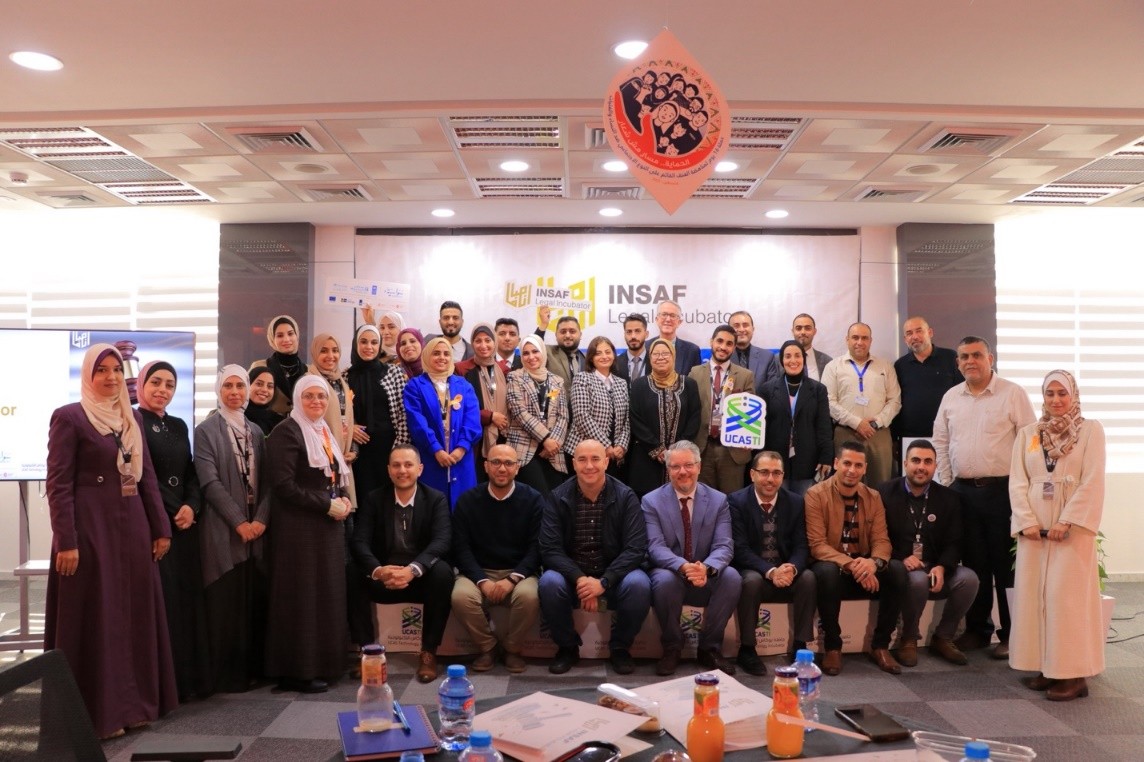
    Launch of the first incubator phase for enhancing the capabilities of female lawyers, sponsored by the United Nations Development Program (UNDP)—Insaf (“Equity”) initiative, December 2022. Hassouna, then the head of UCAS technology incubator, is in front row, third from right

    Photo credits: Gigaza; UCAS

  • Taysir Kamil Ibrahim

    Taysir Kamil Ibrahim

    Taysir Ibrahim (Taysīr Ibrāhīm) (تيسير كامل إبراهيم) was a professor of Islamic jurisprudence and its early history, and Dean of the Shari`a and Law Faculty at the Islamic University in Gaza. His life combined scholarship with community service: he was an active Muslim cleric who served as a preacher and as an arbitrator of disputes. 

    Dr. Ibrahim was born in Gaza on 23 August 1973. He received his bachelor’s degree in Islamic law from the Islamic University in Gaza in 1995, his master’s degree in jurisprudence from the same university, and later his doctorate in jurisprudence from the International Islamic University in Malaysia in 2012. He had also received a general education diploma from the Islamic University in Gaza, and a special education diploma from al-Aqsa University.

    Dr. Ibrahim taught as a lecturer at the Faculty of Islamic Propagation at the Islamic University, as well as at the College of Companions and the Rabat College in Gaza. He headed the Department of Islamic Shari`a at the Islamic University of Gaza between 2012 and 2013. He was also the coordinator of the Faculty of Shari`a and Law at the university’s southern branch between 2007 and 2009 and again between 2013 and 2016. He was the Deputy Dean of the Islamic University’s southern branch from 2016 to 2017, and Dean of the Faculty of Shari`a and Law at the Islamic University from 2021 until the time of his death.

    An active scholar, Dr. Ibrahim authored and co-authored some fifteen peer-reviewed papers in the field of Islamic law on topics ranging from Islamic legal reasoning to Islamic legal perspectives on war and worship. He taught courses on the principles of Islamic jurisprudence as well as specialized topics such as human rights, transactions, and theories of interest in Islamic law. He was also a public educator who often appeared on media programs on Islamic law and participated in curriculum development for Palestinian schools. 

    As a practicing jurist and cleric, Dr. Ibrahim served as Chief Justice for the Islamic Resistance Movement in Palestine and frequently preached in mosques in Gaza. He also acted as the Shari`a arbitrator for alternative dispute resolution for the Palestine Scholars’ Association.

    Dr. Ibrahim, age 50, was killed, along with his entire family, in an Israeli airstrike on al-Nusayrat Refugee Camp in central Gaza on 17 October 2023.

    Photo credits: IPS; Nabd